Friday, January 06, 2012

eulogy

It was an odd Christmas back in New Zealand. I sprung out of bed early to put together a hearty breakfast - scrambled eggs with roasted tomatoes, rosti and smoked salmon. There was ceviche to marinate, a Marie Rose sauce to put together and prawns to peel.

We hit the road with a few treats, following the familiar route to the nursing home. While mum couldn't make it home for Christmas, I was determined to bring some of it to her.

I've written before about what a cruel bitch dementia is, add a stroke and immobility and little is left. Aromas, tastes, sounds and touch can sometimes reach parts of the brain otherwise immune to language. For mum's last Christmas I was determined there'd be a gin and tonic and prawn cocktail, diced small enough to savour a teaspoon at a time.

The G&T hit that hidden spot. A smile as wide as a river. Each mouthful of prawn cocktail swallowed with something that looked like joy.

So pleased we'd found a way to make the day special in some way, for someone who barely knew her name let alone the date.


A little over a week later, my mother died.

I was just pleased she got a last gin, something that had previously been a daily reward for decades.

Back in Wellington, as the northerly wind whips past outside, I try to write her eulogy. All I can think of is standing at the kitchen bench creaming butter and sugar to make a cake, biscuits or a slice.

A year and a half ago I wrote...

Like many of us who are comfortable in the kitchen, it carries a daily reminder of the culinary traditions shared by my mother. Even if for me some of these skills are now redundant – through observation and careful assistance my mum taught me how to cream butter and sugar for a cake and to use the eggs from the pantry, not the cold ones in the fridge, for baking. As a carnivorous child I learnt how to brown cubes of beef for a casserole and the art of gravy making.

Decades on and in a different country, when I stew rhubarb (the only fruit that was ever plentiful in our shady garden) I cut the stalks into thick slices with my mother’s hands. I toss the sugar in carelessly, adding sweetness as required, remembering to only moisten with a little water and keep an eagle eye on the pot while it simmers on a low heat.


Though my mother is still able bodied, she no longer stews fruit. It’s years since she cooked and the poorly stocked kitchen under my father’s reign fills me with waves of grief each time I visit. This was once the heart of the home, now the drawers and cupboards are alarming spartan. It is the room of the house I feel her absence most. Despite that fact mum still bustles in, she might eye the kettle but is unable to reliably make a cup of coffee now.

Lately I’ve found myself honouring her memory by reading the books she used enjoy and keeping some of her kitchen traditions alive, albeit on another continent. I know I can’t blow the dementia from her brain or bring back the woman who raised me but I find these rituals comforting. For now she still has a dry sense of humour and can come up with the odd gem. She knows who I am but our baking days are over.


I'm looking forward to this phase of grief being over, returning to my own kitchen and paying homage to my mum in the way that comforts me most.

Labels: , , , ,

Thursday, March 31, 2011

refreshment break

Time to take a short break while life whirls on around me. My head and a heart are in NZ with my family at the moment, though the rest of me remains on the other side of the Tasman.

While I'm contemplating the universe and the complexities of aged care, help yourself to a drink. This one's for the kiwis. Not the ever popular L&P but a family favourite from my childhood.


Camroc was a dry ginger ale, popular in New Zealand in the twentieth century.

In our house, where soft drinks were a rare treat, camroc was reserved for when we were ill. Being bought a small glass of camroc, by mum, while languishing in bed with a malady made being sick worth it. If camroc didn't bouy our spirits, she knew something was desperately wrong.


Click to enlarge. An ad for Camroc, (Wellington's) Evening Post, 1913

Does anyone know when and why Camroc went out of production? Sorely missed by at least one Wellington family.

Labels: , , ,

Tuesday, January 18, 2011

keeping calm and carrying on: urban survival kit

Just quietly, between you and me, after a couple of weeks off I’ve found going back to work this year a bit of a shock. Instead of the usual gentle plunge into the working year, it’s felt like an inundation.

Perhaps it didn’t help that my first day back coincided with rising floodwaters in Brisbane, where the latest sms from my cousin informed me he was sandbagging his new business and reeling from his insurance broker laughing when he asked if he was covered for flood damage. With an eye on the news and the excellent social media update via #qldfloods on Twitter during my lunch break, my heart felt like it was a thousand kilometres away.

But thanks to the twitter stream it soon became apparent that I live in a totally different world to some of the Brisbane tweeters. I was struck by some updates mentioning they’d rocked up to find empty food shelves at the supermarket and their cupboard at home was perennially bare as they “eat out most of the time and buy on the day if I cook”.

My mum was raised through hard times being a depression era child. Perhaps if she’d been a baby boomer I wouldn’t have done a sneaky audit of the bathroom one day in my teens and counted 24 rolls of toilet paper, 9 cakes of soap and 4 tubes of toothpaste, stockpiled away in the cupboards. Everytime the local stores discounted her favourite brands she’d buy a few extra, just in case.

I miss her old pantry, stupidly sacrificed in a really bad 80’s kitchen renovation, which always seemed packed to capacity. In autumn she’d bottle peaches, apricots and tomato sauce (the later flavoured with dried pimento seeds, unless my mind is playing trick on me). Throughout the year there’d be canned versions of the same, bought on sale, for when her own bottles had run out. There was always many kilos of flours and sugar in the deep drawers where the baking supplies were kept.

In the garage sat the ginormous chest freezer purchased in the 70’s when buying “a whole beast” with a neighbour came into vogue. For years half a pig's head greeted you on opening the freezer, until one day she quietly threw it out. Our family of five chomped through meat at least twice a day but our conventional tastes tended to stop far south of a snout.

The clay soil and challenging weather limited the vegetable garden but in summer there’d be a crop of runner beans and strawberries. Sometimes she'd try something new but our favourite would be the joys of running through rows of corn that would tower over me before the cobs were ready to pick. Throughout the year the rhubarb remained constant, along with curly leaf parsley and a small but proficient lemon tree.

I am convinced we could have eaten well for weeks on the pantry stores and garden, let alone remained clean, if disaster struck. During the odd storm that took the power out, the neighbours would pull their camp stove out and boil a billy for tea. There was no doubt that in the case of a major emergency the locals would pool resources and help each other out.

Here in Melbourne in the 21st century I’m not feeding a family of five but between kitchen, garden and neighbourhood connections I think I could make a fair stab of not going hungry for a month. While the barbecue gas remains on good supply – there’s kilos of dried beans, lentils and whole grains to feed the entire street plus a sizeable pile of canned legumes, tomatoes, packets of pasta and baking supplies. Arepas on the grill with refried beans and fresh salsa anyone?

So what do you stockpile? I’m guessing if you are a food blog reader/writer your own supplies aren’t too shabby.

And while we're at it, what do you have in your urban survival kit?


Urban survival kit


Enough food and water to last a week (for each member of the house)
Canned beans, fruit, fish and vegetables
Dried grains (rice, oats, quinoa etc) and legumes
Raw nuts and seeds, dried fruit (great high energy snacks)

Crackers, mountain bread and other floury goods.
Flours, sugar, oil, sauces
UHT milk/tetra packs of alternative milks


Wind up or battery powered radio (cos the batteries in your smart phone won’t last for long if you’re streaming audio)
Wind up or battery powered torch
Spare batteries
Candles
Matches/lighter
Barbecue or camp stove
Old fashioned landline phone (not requiring electricity)
Basic first aid kit – especially bandages, dressings, antiseptic
At least a fortnight’s supply of any essential medicines (and condoms for those who use them, it’s amazing the amount of babies conceived during the aftermath of disasters!)
Mosquito coils

What would you add?

PS: not a necessity but my friendly organic grocer suggested I stock up on ginger, anticipating a shortage in the near future as it's a Queensland crop.


Or instead you could donate the money to a plethora of flood funds - not just in Australia but around the world

Queensland
Victoria
Pakistan
No specific funds as yet for the Brazil and Sri Lanka floods but Oxfam suggests becoming a 365 Emergency donor

Labels: , , , , ,

Monday, October 18, 2010

A tale of two English Christmases

Compare and contrast. Two New Zealanders adrift in Britain. Hurrah it’s Christmas! What’s on the menu?

My grandfather: New Zealand Rifle Brigade, Sling Camp, Salisbury Plain 1916

Breakfast fish, (unreadable) and bacon, fried onions and mashed potatoes. Dinner Turkey, Goose, cauliflower, potatoes and peas and stuffing, plum pudding and brandy sauce, nuts, fruit, oranges, apples, bananas. Tea roast pork, fruit salad and Devonshire cream, chocolate and bulls eyes, mince pies. Supper ham, cheese, biscuits.
More from my grandfather’s war diary - bully beef and biscuits at the front.

The granddaughter, London 1985

Christmas was nice. Never had a Lesbian xmas before but I suppose there is a first time for everything! Jac was stunning in a 3 piece suit, with pink bowtie to match the streak in her hair. Started off lounging around eating chocolates and drinking sherry, then got onto the port. Dinner was an avocado salad for starters, followed by a splendid nut roast, sauce, chestnut stuffing, roast spuds and other veggies – downed with bubbly. After there was pud with brandy butter, cake, pink triangle sweets and marzipan stuffed dates. Did I miss anything?
You can read more nostalgic twaddle about living in London the ‘80s if you really want to.

Labels: , , , , ,

Thursday, September 23, 2010

hug a chef week

Back before it was fashionable, I had a relationship with a chef.

He worked in the kitchen of a starred hotel, part of an international chain. Each afternoon he’d iron his uniform, ready his knives and polish his boots. He’d leave the house smelling of Paco Rabanne, returning 11 or more hours later stinking of sweat, fat and god knows what else.

It wasn’t a glamorous job but it had its compensations. On the rare night off when he’d cook at home there’d always be the juiciest steaks or exotic delicacies like frogs legs, courtesy of the big hotel. Not that they knew.

The pay was lousy, despite being years out of his apprenticeship, made slightly better by penalty rates from working unsociable hours. Though I had a mate who worked nights as a rubbish collector at the time who was paid more and came home smelling a darn sight sweeter.

Knocking off late at night, when a city like Wellington was all but closed, he had three options to wind down - get pissed, stoned or fuck someone. Often all of the above. And at times I suspect all three before he left work.

From our liaison I got an appreciation for sharp knives, learnt how to make nifty little bundles of carrots held together by their own ring and became rather wary of sexually transmittable diseases.

And that was before Anthony Bourdain wrote Kitchen Confidential.

I’ve always felt a little troubled by the cult of the celebrity chef. Working split shifts in commercial kitchens are often dangerous, poorly paid and crap for your love life. When Jamie Oliver and Fifteen became popular, I queried the wisdom of putting damaged kids, often with a history of substance abuse, into such a dysfunctional work environment.

There’s little glamour in the kitchen for the average chef. Most don’t get to own an eponymous restaurant, flash their face on television or publish cookbooks. The cycle of sex, drugs and alcoholism in kitchen is apparently not a myth in this city. Of course not every chef, cook or dish pig has a raging habit and some do manage to balance healthy relationships with antisocial hours. Though I’ve got to say the healthiest and happiest chefs I’ve met are ones who’ve taken a back step from the relentless kitchen grind and diversified their skills.

Despite the sanitisation of the professional cook on television, it still looks like an adrenaline fuelled, dirty job to me.

But without them, no matter how skilled we are in our homely kitchens, eating would be a much less interesting sport.

So hug a chef today and tell them you appreciate them.

I’ve cyber stalked the long time ex to no avail. Last I’d heard he’d gone from working in prestigious kitchens to stints of cooking in Kalgoorlie and other gritty mining towns. Despite the pride he took in what he made and the exacting professionalism he once had, I get the feeling life hasn’t been easy for him since our paths last crossed.

Then again, he may have married, had kids, moved to the suburbs and become a respectable sales rep, for a pharmaceutical company.

And despite all the fancy things he could do with carrots, the ice sculpting and butter carving, I’ve not found a cookbook with his face on it yet.

Labels: , , , , , , ,

Saturday, July 31, 2010

my life in 10 dishes

Jill Dupleix mused about her life in 10 dishes in the Sydney Morning Herald this week.
There are lots of ways of tracing your own personal history. You can go back through family photo archives and trace the hair styles. You can do it with music, by listing the songs that symbolize special times in your life. Or you can do it with food.


How could I resist?

1. Cheese on toast. The standby meal/snack from as far back as I can remember that lasted til my mid-twenties, when I realized my relationship with delicious dairy was a dysfunctional one. On Sundays when we’d been to my Nana’s for a roast lunch, dinner would be Maggi chicken noodle soup and cheese on toast in front of The Wonderful World of Disney. Life didn’t get better than that.

2. Chop suey. Mum would fire up the electric fry pan and toss together onion, garlic, veal, cabbage and soy sauce. A dish that the entire family liked so was in regular rotation with the other staple – chops and veg. Very classy home cooking C1970.

3. Afghans. Opening the biscuit tin after school and finding a fresh batch of afghans, with the obligatory piece of walnut on top of the splodge of chocolate icing, was pure bliss. I’d love to find just such a tin in my grown up life house.

4. Beef stroganoff. At twelve years old I cooked stroganoff, a dish I’d never eaten before, for my mother and aunt one night. Mabel said, “You’ll make someone a good wife”…Perhaps if I’d continued cooking with meat and dairy I would have?

5. Baked chicken breasts. Leaving home at 18 I moved into a soon to be condemned flat with a lovely housemate and his German shepherd. I remember partaking in illegal substances on the stovetop in the cupboard-sized kitchen but for dinner I’d use my shiny new toaster-oven and bake chicken breast slathered with garlic.

6. Quiche. The year was 1983 and my on-the-verge-of-coming-out housemate taught me how to cook quiche. The house was slightly better than my first flat and although the gas stove was suitably antiquated I still knocked up cakes, curries and the odd quiche.

7. Baked potatoes. In London I was vegetarian (I rarely ate seafood due to the Irish sea being radioactive) living with two pregnant/lactating women, an accountant, a witch, two blokes, three small children and a couple of chickens. The house was big, warm and better than anywhere I previously lived. Best of all was the American-style double oven in a huge kitchen with a wooden table that comfortably sat 10. The worst crime was not cooking enough food, so that meant scrubbing at least two dozen potatoes, to serve baked with a big pot of ratatouille .

8. Vegan Mexican feast. Living in Melbourne exposed me to exotic foods from many cultures. There was a short lived Mexican grocery store in Lygon Street in the early ‘90’s and I threw a few dinner parties featuring fresh blue corn tortillas, refried beans, salsa spiked with jalapenos and jugs of margaritas.

9. Whole fish. Apart from scrubbing fewer potatoes, life beyond shared houses meant I cooked and ate more seafood. Growing up fish meant fillets, so exploring the world of cooking the entire beast was virgin territory. From simple, just a few lemon slices or a handful of herbs in the belly, to baked with spices, olives, tomatoes and slices of potatoes, I love this economical way of eating fish.

10.Curries, tagines and the spicy life. Though I cooked my first vegetarian curry from scratch in the quiche house a couple of decades ago, it’s been a long journey to roasting and grinding my own dried spices and growing fragrant green herbs. The last decade has been flavoured with sambals, Sri Lankan curries, fresh harissa paste, tamarind, kecap manis and Vietnamese mint. The herb cupboard overflows and the tagine is a utensil not a decoration. Please don’t make me choose a favourite!

So what dishes characterise your life so far?

P.S. - I'm guessing like many biographical entries, what we did in the past doesn't always represent our present. I can only eat 7-10 (plus a modified #3) these days but it was sweet to remember them none the less.


Labels: , , , , , , , , ,

Wednesday, July 14, 2010

grown up chocolate rough

Edit: 2026 see recipe update below

Outside it was hailing. The steep green hills were shrouded in precipitation and it felt like the school holidays from my childhood all over again. Marooned in the suburbs all I could do was go with the flow and revert to what I used to do when school was out in winter.

Either bake or have a tantrum.

I chose chocolate rough.

My mother, the baker’s daughter, always had homemade biscuits or slices in the tins for a snack after school. Chocolate rough, a thin biscuit base with a slab of chocolate and coconut icing, was a family favourite. I doubt that I’ve eaten it since I left home.

Other than having a stab at converting the recipe to metric without the aid of the internet or other references (I ended up mistakenly cooking it at 150 c, it took twice as long but worked just fine) compared to the original recipe I’ve reduced the sugar and added more cocoa, as well as concocting a wickedly adult icing. Not being a fan of the over-sweet, I went for 85% chocolate for the icing. Though initially worried it would be too bitter, the combination balanced out perfectly. For this version a thinner layer of icing is better. It made a richer, more grown up slice than the original recipe. For children, or for those who are not a fan of dark chocolate, make the icing as directed in the original recipe (see photos below).

Update: This could be easily veganised - I reckon replacing the butter with (semi solid) coconut oil would be fantastic. The chocolate I use is already vegan and it's a lovely egg-free recipe. Likewise for the wheat-free/gluten-free folk, the flour is used to bind rather than for a fluffy texture and is easily replacable.


Shirley’s chocolate rough
(A note on quantities: This yielded 2/3 of a small baking tin. I’d recommend you double the quantities if you wish to use a Swiss roll or medium sized tin)

Original rejig (see below for update)

115 gm butter
3/4 cup sugar
1 tab cocoa
1 cup flour
1 tsp baking powder
3/4 cup coconut (shredded)


Heat the oven ti 175C.

Cream butter and sugar, then mix in the remaining ingredients with a wooden spoon. The mixture will be a little on the dry side but don’t worry. Press into a greased tin, until even. It only needs to be about 2 cm deep.

Bake for 10 minutes.

Allow the biscuit base to cool a little in the tin til it is firm to touch but still warm.


Icing

100 gm chocolate (70-85% cocoa solids)
20 gm butter
1cup coconut

Melt chocolate carefully in a double boiler, then stir through butter and coconut. Remember to ice while the base and the icing are still warm.


2026 edit - to hopefully fill the whole pan next time


So I got the urge to make this again but despite reading the note about increasing the recipe, I mistakenly believed that the tin I was going to use was smaller than the one form home. 

On the upside I remembered to adjust the temperature for fan forced oven, dropping the heat to 155-160c and 10 minutes was perfect.

The topping though wasn't quite enough, nor when it cooled looked as glossy when set. 1 cup of coconut seemed a tad too much compared to the amount of chocolate
I've crunched the quantities and adjusted recipe with a few tweaks for next time.


155 gm butter
125 gm sugar (I used rapadura)
1,5 tab cocoa
155 gm flour
1 1/3 tsp baking powder
1  cup ( coconut (shredded)

Heat the oven to 175 C/155C fan forced.

Cream butter and sugar, then mix in the remaining ingredients with a wooden spoon. The mixture will be a little on the dry side (actually quite crumbly but don't underestimate the work of the butter)  but don’t worry. Press into a greased tin, until even. It only needs to be about 2 cm deep.

Bake at 175 C f(or 155c fan forced) for 10 minutes.

Allow the biscuit base to cool a little in the tin til it is firm to touch but still warm. It really does miraculously start to firm up even though still feels warm!


Icing

180 gm chocolate (70-85% cocoa solids)
25 gm butter
1 1/4 cup shredded coconut 

Melt chocolate carefully in a double boiler in a bowl in the residual heat in the oven (once base finished cooking and heat turned off) hen stir through butter and coconut. Remember to ice while the base and the icing are still warm.


Shirley's original recipe


Labels: , , , , , , ,

Thursday, June 17, 2010

more white flour and sugar than you can poke a stick at

In the spirit of Smiley Face Thursday (ok, I made that up)...


Cake shop, Katoomba, NSW

An old fashioned bakery fills my heart with nostalgia but fortunately I'm happy to just eat these with my eyes. I loved looking at the spread but the only treat that lures me in is a decent apple turnover (sans cream) or even better with "mock cream". Crisp pastry, gooey chunks of apple and a side serve of nostalgia.

The winter solstice is almost upon us. Then sun will return, the mornings will warm up eventually but for now I'm happy with soup, woolen blankets and snuggles with a happy cat.

Oh and looking smiley faces on bakery treats!

Labels: , , ,

Sunday, June 15, 2008

winter solstice cake with pineapple

Today I approached my kitchen in an entirely new way.

First, I tried to remove as much stray cat hair as possible clinging to my clothes.

Then, I tied back my wayward hair.

I even put on an apron (I own an apron? Well it was a giveaway with a magazine or something).

My hands were washed, the table and bench top wiped.

I got out all the ingredients ahead of time.

It was like the totally organised, Virgo part of me was invited to a party and the rest of me came along for the ride.

After two days marinating of copious amounts of dried fruit in the largest bowl I could find, today was D-Day. Cake wise that is. Barring any catastrophe, I would make a solstice cake.

I was sure there would be far too much fruit. No way would the completed mix ever fit into the cake tin. I even got out the tape measure to see if the largest tin really was 9 inches (in old money). I had contingencies, the muffin tin at hand if there was any leftover but despite all odds the quantities were perfect. Imagine that, when you follow the recipe it all worked out in the end.

I improved a little on the spices, threw in a random ingredient and even blanched my own almonds.

And now I sit, being tortured by the most exquisite aroma of a cake cooking for at least another 3 hours.


So I typed two weekends ago. I had so much fun “acting into” the role. Really, it took me back to my acting days.

My mother, the daughter of a baker, spent her teens icing cakes and slices and other sundry kitchen handing. I grew up knocking out sweet treats under her tutelage. But in my post-non-dairy, health conscious years the ritual of the cake is all but lost on me. My mum is on the decline these days; she doesn’t cook let alone bake. The last time I made Alison Holst’s Pineapple Christmas Cake I was still at school, my mother buzzed about the kitchen lending a hand yet still made me feel like it was her creation. This drive to bake a solstice cake has been a very personal one – part pagan and part nostalgia. I’ve been slow on the uptake about this but I have realised making any kind of food from my childhood has become a way of reconnecting with the happy memories I have of being mothered, in the kitchen where she reluctantly spent most of her time.

So a confession. I don’t really like fruit cake, though the Significant Eater goes wild about it. The making of the cake was about the process for me – I don’t give a hoot about the outcome but I promise before the event is up I will have the critics road test it for us all. With such good quality ingredients (organic butter, flour and eggs, dried fruit not preserved with additives, I know you would expect nothing less from me!) it would be really difficult for anyone to mess it up.

Another joy about baking a cake that I had forgotten about was the child like pleasure gained from licking the beaters and the bowl before cleaning up. I certainly know that got my taste buds excited.

As you may have guessed, I had to make a few tweaks to the original recipe. Firstly if you want a temperance cake, omit the rum and brandy and just soak the fruit in the pineapple and its juices. The original recipe doesn’t macerate at all but I think it is always a good idea to rehydrate the fruit. The real deal also uses 1/2 tsp of almond essence and a 1/4 tsp of ground nutmeg. The former is too synthetic for my liking and the later; well I just got swept away by the smell of mixed spice instead.

I have always wondered why my fruitcakes are blondes while others knock out to brunette til I came across the SE’s mother’s recipe that calls for something called Parisienne Essence. Basically this little concoction of chemicals is used to make gravy darker and other such things. As much as I liked the idea of a lush, dark battered cake I wasn’t going to use some fake browning agent. My solution was to use 1 tablespoon of cocoa. I didn’t want this to be a chocolate cake so figured that a tablespoon would make the colour slightly richer (along with brown rather than white sugar). Though have to admit my choice of rum, not my favourite brown distillation brandy, was a tribute to rum and raisin dark chocolate. It could have been worse, I seriously considered Malibu as a companion to the pineapple for a number of days!

Stay tuned for the updates on taste, appearance and texture.


Have you started your solstice cake yet? Get cracking as you have til the 25th June to submit it.

Pineapple Solstice Cake

1.5 kg mixed, dried fruit* (sultanas, diced dried apricots, currants etc)
1 cup crushed pineapple
200 ml dark rum

225 g (8oz) butter
1 cup brown sugar
3 teaspoons mixed spice (or 1 tsp each mixed spice, cinnamon and ginger)
1 tablespoon cocoa
6 large eggs
3 cups flour
blanched almonds – to decorate
1/4 cup of brandy

Soak the dried fruit, pineapple and rum in a large bowl for 1-2 days. Keep covered but stir occasionally. In the cooler months it is fine to leave it macerating at room temperature.

Preheat your oven to 150 c (or 130 if using a fan forced oven). Line a 23 cm (9inch) cake tin with a double layer of paper. You can use newspaper or brown paper on the bottom and a layer of baking paper on top.

Cream butter and sugar until light and creamy. Add spices and cocoa and give it another whirr with the beaters. Add eggs separately (it is a good idea to crack them as needed into a small bowl, to make sure you don’t wreck the cake with a dud egg or a bit of shell). Between each egg add a little of the sifted flour if there is any sign of curdling.

Stir in the macerated fruit mixture and slowly add the rest of the flour. Use a wooden spoon and a lot of muscle to as you work the mixture. Make a wish as you stir away (mine was for better muscle tone). Add a little extra flour if needed, you are aiming for a moist batter that will "drop from the hand" (so said the recipe I slavishly wrote in my best hand writing as a teenager). It just means that it batter shouldn't be so wet it sticks to your fingers. Once you have reached the required consistency, dollop the mixture into the lined cake tin, pushing it well into the corners. If you are not going to go the whole hog and do the marzipan icing, then decorate the top of the cake with blanched almonds.

Bake at 150c for 2 hours, then at 130c for a further 1.5 – 2 hours. You know it is cooked when the skewer comes out clean.

While still warm (the recipe stated to do it in the first 5 minutes) pour over the brandy, if you like a slightly tipsy fruit cake, it is Solstice after all. When cool enough to handle, take the cake out of the tin and cool on a wire rack.

Once fully cooled store in an airtight container. For a Christmas cake I noted to make it in October. We also lovingly 'fed' the cake with a tablespoon of brandy sprinkled over the top every week. I've never been a fan of glace fruit or marzipan as I feel so much fruit and sugar is sweet enough. But don't hesitate to make this cake your own by honouring it with your own family traditions.

* For this cake I used sulphur free dried fruit – 750 g sultanas, 500 g diced dried apricots and 250 g currants.


Labels: , , , ,

Monday, April 21, 2008

Why I loved Melbourne food from the first mouthful

My first grown up meal without my parents.

Does being taken out by your neighbour from home, while visiting your sister on your first overseas trip count? I was very young but perhaps this is the meal that cemented my love of both food and Melbourne in the first mouthful.

I ate at least courses and though underage, was plied liberally with alcohol. (This was the same neighbour who called us over to sample a new cocktail "It's a Harvey Ballbanger" he said with a straight face. I was in primary school at the time.) Despite the wine and port, this may also have been my first grown up restaurant meal that I ate without throwing up afterwards. As a child I had a passion for creamy sauces (all that 70’s/80’s heavy European food, like veal Marsala) long before I found I was allergic to the stuff.

I remember being so excited by this meal at Gordon Place, a restaurant in a massive atrium built around a large palm tree, with it’s menu full of fresh flavours and new foods. This was my first experience of quail and ‘bugs’ an exquisite Australian crustacean. I ate at least 3 courses, if not 4 if the pencil marks on the menu I souvenired are to be believed.

While the menu from the early ‘80s bears many hallmark dishes of the time – crumbed brains and bacon, chicken stuffed with cheese, beef Wellington and the quintessential creamy veal dish – I’d still begin with the Morton Bay bugs with lemon mayonnaise and end with the seasonal fruit salad today.

Anything take your fancy?

Labels: , ,

Wednesday, January 30, 2008

confessions of a kitchen hand

My parents’ original kitchen had a low bench, the perfect height for a child to learn the basics of cookery. It was the spot to mix eggs and sugar for cake batter with the electric hand beater or later the huge trusty Kenwood. The perfect height for making pastry or kneading bread. The right nook for placing the electric fry pay when cooking up a batch of pikelets or as a forerunner to a wok for making such 70’s savoury exotics as chop suey. It was where I liked to sit and swing my legs while watching the workings of the kitchen and ask those unending childhood questions that always began with “Why..?”

My familial apprenticeship complete, I moved to my first shared house equipped with my handwritten recipes and a toaster oven. A couple of houses later I’d finished my B.A. and quite unsurprisingly found myself unemployed. With a choice of being a waitress or a kitchen hand I opted for the latter. I’ve never done servility well and anyway tipping didn’t exist in the kind of establishments that I was likely to work in at the time. If I were to work hard, I’d prefer to get dirty and sweaty with a smile being entirely optional.

I found myself getting some plum shifts at a chaotic café run by a couple of refugees from the theatre. They had the romantic vision along the lines of “I’ve always fancied running a café” common to people who’d never worked in hospitality before in their lives. They were good women, working in the most grossly under funded area of the arts who wished to create a bohemian haven for their fellow travellers. Art adorned the walls, a soundproof door could be pulled across to make a performance space, there was often a joint to be shared in the storeroom and there was always a satisfying meal to be had for a pittance.

The kitchen was a moderate size and open for all to see behind a servery hatch. I’d start the shift prepping salads or whatever in the whirl of their day had not been completed a whisker before opening for dinner. The food was basic stuff – vats of homemade soup, large bakes, massive bowls of salad, huge cakes served in generous slices, a pudding with lashes of cream. There was no table service. Punters would line up behind the counter and be served on the spot. In the odd liquor licensing of the day there was no bar but Irish coffees were permitted – a mug of filter coffee with a dollop of whipped cream with a nip of whiskey poured over the top.

Once the food was on the counter – I’d toil at the sink washing dishes, serve when one of the owners wanted a break, clear the odd table and wash more dishes. With no true chef on the premises I cannot confess to learning how to correctly slice or dice or pick up any handy cooking techniques but I’m proud to say my mother had trained me well enough that if a health inspector happened to pop in while I was on duty, the café would never fail the test. Of the many odd jobs of my youth, this is one I remember dearly. My ill-suited employers were good bosses, nice people and what’s more – on Sunday nights I got to take home all the leftover cake as they were shut the next day.

Wellington is now a city of funky cafes and more espresso machines than people know what to do with. The home of my hospitality experience of the 80’s has long ceased to exist, the women sold the place after a couple of years to someone more suited to the task. It eventually changed its name and at some point between visits the place sunk without a trace. But it was a great concept and I'm sure it holds a place in the hearts and stomachs of those who frequented it.

Whenever I hear someone who enjoys eating and cooking look around their local haunt and utter, “I’d like to run a café”, I smile quietly to myself and ask if they’ve ever worked in such a place. The reply inevitably is negative followed by a big but – they eat out so much they know how restaurants are run/all their friends tell them they are such a great cook and they should open their own place one day/they are sure it couldn’t be that hard. I think of the two friends from the theatre who followed their vision, worked so hard as to knock a few years off their life expectancy (or in one owner’s case – pickled her liver to compensate) and left a legacy of memories for some of their customers and the odd kitchen hand they employed.

Labels: , , ,

Monday, December 03, 2007

gratitude

For a very brief moment I indulged myself in a thought as to the size of my ‘new’ kitchen. An L-shaped corner of a small dinning/living room it is very compact, big enough to squeeze in a dishwasher but too small to fit to a wider oven. While I spent a moment coveting consumerism in all its over-applianced glory, I spared a thought for my very first out of home kitchen.

It was a cupboard really, about the size of a walk in pantry. Instead it contained a single sink on a short bench and an upright stove, no doubt leaking a little gas. The adjoining living room housed a small fridge, toaster oven and a wooden table that doubled as a food prep area. I am not exaggerating in any way when I say the whole house was condemned shortly after I moved out. Probably not because of the kitchen, nor the lack of heating or the bathroom window that couldn’t close and let in a wind straight from the Antarctic. Likely because it abutted a hillside, like many Wellington homes, not properly braced and likely to cave in at any time. The mould growing through the back rooms probably didn’t help either. Nor the drunken Irish wharfie who lived downstairs and risked setting the place alight on one of his daily benders.

After living in the same home for 18 years, I set off into the world and have resided in 13 houses since. London was the antithesis of the cupboard kitchen. It was closer to half the entire size of my current abode. The kitchen table could easily seat a dozen; so large it was actually constructed in the room. There was a double oven and six-burner stovetop. Huge jars full of every grain and bean under the sun adorned the shelves. A boyfriend dubbed the sprawling Stoke Newington residence as a house of food worshippers. That kitchen truly was the heart of the home. The living room was only used occasionally to watch the tiny TV and dance to “Top of the Pops”.

But from the sublime to the ridiculous, a physical kitchen has little impact on the food you make in it. Sure the mouse infested cupboard kitchen would not have inspired me to make my own pasta (a lack of surfaces to roll out the dough) but nor does the modest expanse of granite in my current home. If I really wanted to make it, I would – wherever I was.

Some of the best meals I have made have been over a campfire. Food prepared on a half an ordinary sized chopping board with the feeblest of knives. One pot (never big enough) and a fry pan, not even a Dutch oven, Don’t blame the tools - it is all about inspiration.

So any laziness on my part with my current culinary creations will not be cured with the latest gadget, more bench space or industrial gas burners (well maybe with the last one). I’m on the verge of considering buying a real BBQ (note to Father Christmas) and am sure, Total Fire Ban Days aside, will inspire a short burst of grilling and fish or vego delights. This is a short time after the US bloggers have made mention of giving thanks, sometimes we are slower to do such things in the Southern Hemisphere, but my belated gratitude is for access to such plentiful food, cooked on whatever means at hand. Sometimes, less is indeed more.

Labels: , , ,

Tuesday, November 20, 2007

Mid-flight musings

I can’t eat an airplane meal without thinking of Betty. In no way am I impugning her culinary skills. She was an excellent cook; with such attention to detail it caught my breath at times. No, in her prime, Betty was a trolley dolly. She’d be turning 80 around now, so we are talking the golden era of elite flying – when service really was with a smile.

An old family friend, I met her when I did my OE*. She and her South African husband had a constant stream of visitors in their inner London house and I was one of many colonial waifs and strays she took in, in the most gracious way. There was always a comfortable bed and a seat at their table. Though already a ‘vegetarian’ (misnamed as I have always eaten seafood) it was prior to the discovery of the life changing dairy allergy. Peter, her husband, introduced me to Stilton for which I am ever grateful. He also initiated me in the wonders of dry Spanish sherry taken before a meal, though I never reserved some in the glass to slosh in the soup, as was his want. I did, briefly adopt his habit of grinding black pepper on strawberries, a combination a fine chocolate manufacturer has perfected.

Betty and Peter had a house in the country. A quaint costal town who’s claim to fame in a lighthouse in the middle of the main street. It plays a bit part in a Peter Greenaway flick. The journey from London to their North Eastern bolthole was well worn. Being a hostess for travellers from way back, this is where Betty really shone. A couple of hours into the journey, after a decent breakfast and a civilized departure time, Peter pulled the car (something suitably large and British) into a picturesque lay-by. A little mystified as to the isolated spot and the announcement of lunch, the boot was popped and Betty whisked out 3 individual trays. Just like the meals on a quality airline, these nifty pieces of moulded plastic nestled a perfect array of containers. Mine held a vegetarian wonder which she must have slaved very early in the morning (possibly a spinach roulade, which was certainly one of the memorable dishes she ccoked for me), a salad, a crispy bread roll and some kind of delicious sweet treat. I’d never seen such domestic perfection, nor experienced airplane food that has surpassed it (though that only reflects the class I fly). Not to be outdone, Peter played his role; turning to me in the back he enquiring “white or red?” and preceded to proffer a half bottle in either colour, lunch with this couple could not be complete without an appropriate drop.

I look at the diminishing size of the meal on QF631 (an hour late from Brisbane), it’s after 4pm, which means that cattle class get offered a complementary 187 ml plastic bottle of wine (some better than average Victorian wineries for a change). I think of Betty and Peter, their Rover and the best meal on the move I have ever been offered. I remember how amazed I was that she’d been able to replicate the airline trays that she had dispensed countless time in the sky and I tip my plastic tumbler (oh for a real glass) of Pinot Grigio to their memory. How she would shudder to see the casualness of the crew, their pony tails with their late in the day hair escaping, not scraped within an inch of it’s life into a neat bun. What she would make of the serving of food and beverages in plastic bereft of proper cutlery? And the food, oh Betty, the food!


image source


* (For non antipodeans) Overseas Experience – the nickname for the pilgrimage many Aussies and Kiwis make to travel around Europe.

Labels: ,

Tuesday, November 06, 2007

bully beef and biscuits

It appears I am not the first in the family to have a fascination with food. My paternal Grandfather bet me to it, as a soldier in WWI. His diary of his time in the army records memorable meals as well as is distain for the bully beef and biscuits, the standard rations at the Front.

His journal shows he spent more time ill or convalescing, than as a Runner in France. From joining up in early 1916, to the end of the war – outside training, he spent barely 6 months at the Front. His career in the New Zealand Rifle Brigade saw the majority of his time in hospital or classified unfit for active duties. But perhaps the food had something to do with it? A few weeks into his journey to England on the troop ship, he was the 75th on board to get the measles. This is the first time food really enters the picture. He wrote:

Meals good while in H(ospital). Breakfast – porridge, fish and bread and jam, tea. Beef tea in morning or lemon drink. Dinner – soup, fish, tripe and onions, custard or sago, bread and honey. Barley water in afternoon. Tea jelly and bread and jam Cocoa and biscuits for supper


Fortunately he managed to avoid getting meningitis that was also doing the rounds on the ship, or the scarlet fever that caused his hut at Sling Camp to be quarantined. After a few weeks of training in trench warfare, the boys in the 4th Reserves were ready to ship out. Perhaps it was the recent measles but his heart and/or eyes failed the medical and he was bitterly disappointed to see his mates ship off across the Channel without him. Despite two attempts to send him home, which he hotly protested, they finally gave in and sent him into active duty many months after the others that he had arrived with. But not before Christmas day at camp:

Breakfast fish, (unreadable) and bacon, fried onions and mashed potatoes. Dinner Turkey, Goose, cauliflower, potatoes and peas and stuffing, plum pudding and brandy sauce, nuts, fruit, oranges, apples, bananas. Tea roast pork, fruit salad and Devonshire cream, chocolate and bulls eyes, mince pies. Supper ham, cheese, biscuits.


Not quite a blogger but you got the feeling that young Bill liked his food. By Boxing Day he’d come down with a cold and forwent his final few days of leave to stay in bed with a fever of 100 F. Perhaps it was all the food – as they say “If you feed a cold, you will starve a fever”.

While in and out of the front lines he endured the coldest day in France since 1895, “black frost completely frozen bread etc. All time a bully beef and biscuit now”. Parcels from home relieved the monotony of the tinned meat. The odd cake and shortbread that travelled 2 months from home to the Front, went down a treat.

In his diary the only mention of not eating came less than a month after Christmas, with the line “dysentery…very bad could not eat.” The diary goes quiet for weeks after that, til he was cheered up with a dose of mumps that got him sent to the ‘St Omer Mumps Hospital’. “During time in hospital had good time and food good”. The 2 weeks or so away from the shelling, rats and bully beef did wonders for his spirit. A month later, back at Messines he was hit in the foot by shrapnel which had him evacuated back to England where he convalesced in hospital til after the Armistice, 17 months later.

Bill managed to live to see his 70th birthday. He was a keen gardener and grew many of his own vegetables. Shortly into his 8th decade a bus fatally knocked him down, on his way home from a day at the races. I can bet his last meal wasn’t bully beef and biscuits.

Labels: , , , , , , ,

Thursday, May 10, 2007

family favourites

Handwritten recipes in an old book, the pages a little tattered and remnants of the actual dish speckling the paper – these are all sure signs of a family favourite.


As the daughter of a baker, my mum was a dab hand at biscuits and slices, she could ice a cake with a steady hand but took little pleasure from actually eating such things. Her tastes ran to savoury flavours – preferring a bowl of freshly roasted peanuts, tossed with butter and salt, to any dessert. Week night desserts usually revolved around a scoop or two of ice cream topped with homemade chocolate sauce, some canned fruit or if we were very luck it ran to the exotic addition of tinned berries, heated in a pan and thickened with arrowroot.

But the ‘60’s and 70’s were the era of the dinner party and every good wife needed a party piece. My mother’s was chocolate mousse, from an unrecorded source, set in individual parfait dishes and topped with freshly whipped cream and nuts. For a family birthday it would be set in a crystal bowl and sometimes frozen.

On my recent trip home my sister’s wish was to revive the recipe and make it with something better than the cooking chocolate we grew up with. To have a dairy free, rich and luscious dessert is now a rare treat for both of us – so how could I resist the request?

I did my best to follow the recipe to the letter but as our tastes aren’t as sweet as they were in childhood we did tweak it a little. It’s up to you whether you want to stick to the original or try this slight variation.

Shirley’s Chocolate Mousse

5 eggs – separated
180 gm dark chocolate (70% Lindt)
1/3 – 1/2 cup sugar
1/4 cup warm water
1 tsp vanilla extract (the best quality you can afford)
1 tablespoon brandy

Break the chocolate into pieces and melt in a double boiler, making sure that the bowl doesn’t touch the hot water. Dissolve the sugar in the warm water and add to the chocolate as it melts. 

[update: the actual recipe says to melt the choc, sugar and water together. Could adding it to the melted choc be the reason it initially seized? We know that water and choc don't mix. Read this brilliant post on how to remedy the problem - add MORE water and whisk like hell!}

Stir occasionally. Take the melted chocolate off the heat too cool a little then add the egg yolks one at a time, stirring well between each one. If the chocolate is too hot it may cook the eggs.

Beat eggwhites until stiff (so they are fluffy and can hold a peak).


action shot - it's at least 10 years since the old Kenwood was called upon to do it's thing. It's a huge beast but built to last.

Transfer the chocolate mixture to a large bowl and stir in the vanilla and brandy. Fold the beaten egg whites gently into the mixture. You don’t want blobs of egg white but if you over beat it you loose the lightness. Family lore is that if you put in too much alcohol the mousse won’t set.

Pour into a medium sized bowl or individual glasses (or tea cups). Chill for at least 12 hours – it’s a challenging thing to do but try to resist!

Verdict: Sorry Mum, but even without the cream and nuts, the Lindt made it better than you used to make!


Labels: , , , , ,

Monday, July 24, 2006

smoked eel

When I was a sweet young thing, 18 in fact, I went on a first date with a guy who’d turn out to be significant in my life. There had been other attempts at dates preceding this – to a concert (Madness – now that will give away what decade we are talking about here!), a movie (where he showed up with 8 of his mates) but this was the first going out to dinner type of date. Romantic. One on one.

His choice of restaurant seemed curious - the formal dining room of a modest hotel in the centre of the city. The type of place commercial travellers stayed and ate a steak at a corner table. I’d never gone beyond the tacky student bar or the family “Cobb and Co” restaurant at street level. I didn’t even know there was a dining room.

The place was a bit stiff, proper, without going over the top. White napkins. A traditional menu for the ‘80s. That is all I remember* except one thing – we had smoked eel on buttered brown toast as an entrée. My love for eel began there and then. My love for him would take another month before it began to kick in.

I don’t know what the prejudice is about eels. Sure out in the wild they are slippery slimy creatures, things you wouldn’t want to feel brush your leg while swimming in a lake. On the plate, though, is a different story.

New Zealand was never known for a culture of exotic food. The land of the long sliced, white loaf. Roast lamb with mint sauce. Pavlova with lashings of cream and passionfruit. Mostly imported English stodge. Although Maori cuisine is largely characterised by the hangi, they also has a long tradition of smoking foods – especially muttonbirds, rainbow trout and eels. Here in Australia I can find nothing that tastes remotely like the ambrosial quality of a trout freshly caught from a mountain stream and then hot smoked over manuka branches – but when I am homesick a little bit of smoked eel goes a long way.

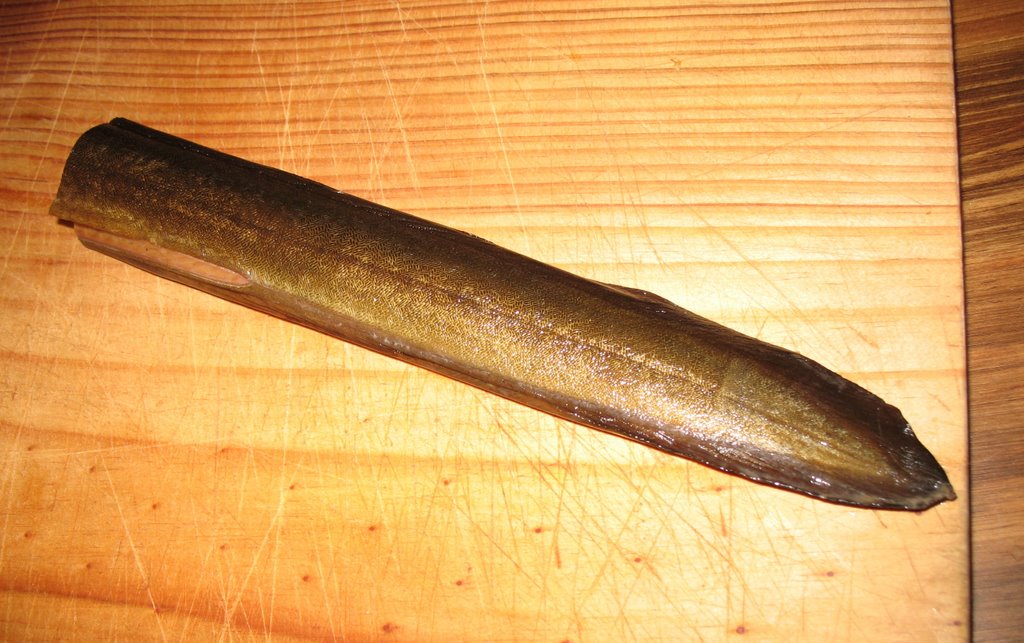
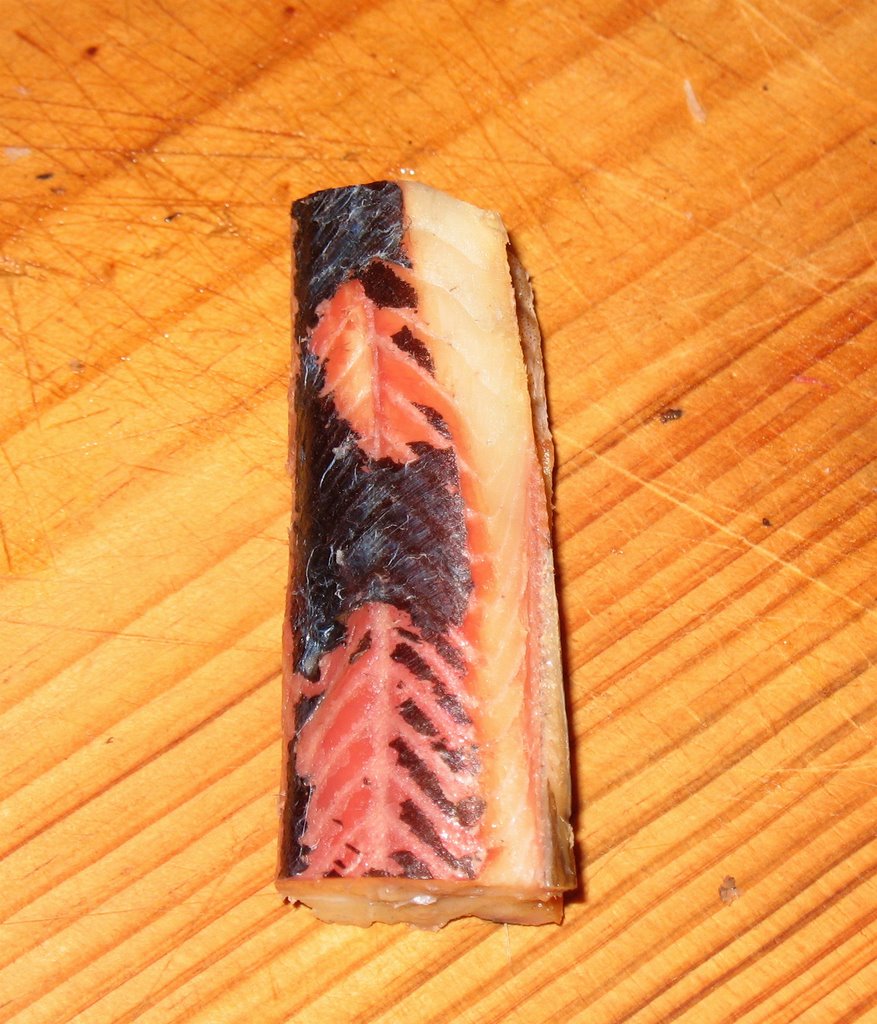
There is at least one stall at Vic Market that sells whole, smoked eel. The supplier has changed since I last got one and instead of being assaulted with a strongly salted, smoky flavour – I was met with a delicate taste and decidedly less greasy than others I have eaten. I didn’t miss the jelly like layer of fat, but a little more salt would have lifted the flavour. The flesh however was pale and delicate, not as red tinged when filleted.

In New Zealand, I have found lovely little skinned and boned fillets, vacuum packed in the supermarket refrigerator. There is a particularly nice local brand I found in Greytown, which is worth a drive over the hill for. However here in Melbourne it’s likely you will have to get down and dirty with the beast. Don’t let it put you off. I promise the experience is worth the effort.


The fatty eels are easier to peel. After chopping off the head and the tail the skin comes off like peeling a banana, but you will need to scrape the jellied oil layer off with a spoon or a knife. Next slice out the backbone.

If you were the kind of kid who liked licking the beaters after making a cake or gnawing on a chop bone, you’ll love taking the spine and scraping off the flesh with your teeth. It is one of life’s primal, very satisfying experiences. Because of this it’s best preparing the eel alone, so there are no squabbles over the best bits!

Now you have some fillets of sumptuous smoked eel – what can you do with them?


The easiest is a return to the Dining Room of the St George Hotel (and how I ate it for years after), simply layer it on the best quality grainy, hot, buttered toast. A squeeze of lemon juice and some cracked black pepper completes the dish.

If you want to get fancier, it extends well to make a pasta salad – a good vinaigrette, parsley, cherry tomatoes, spring onions or chives. Play a little with the ingredients.

You can make a mousse. I’ve made a dairy-free version using good quality mayonnaise, finely sliced spring onions or parsley, with some garlic and lemon juice. But remember it is a rich and oily fish. While a little dab on crackers is great, too many and it will get your gallbladder working over time.

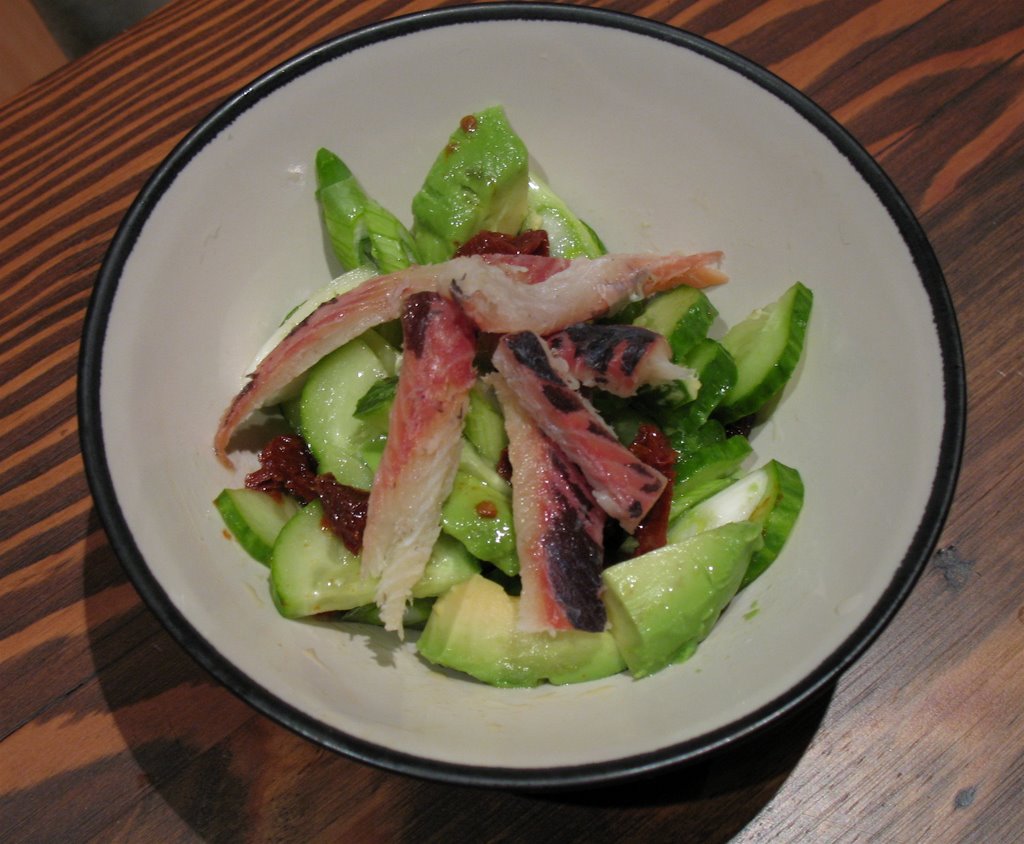
But for a simple entrée – on the weekend I put together a little eel salad.

Simple smoked eel salad
Smoked eel fillets, cut into strips or chunks
Avocado
Cucumber
Spring onions (or garlic chives)
Cherry tomatoes (if out of season use some semi dried tomatoes)

Chop your salad vegetables into small to medium sizes. Assemble in small bowls with pieces of smoked eel on top. Dress with either lemon or lime juice, or a vinaigrette. A dollop of good quality mayonnaise is also worth trying. Some finely shaved fennel bulb would have been a great twist, but I was using what I had at hand.


Eel of course is not limited to the smoked variety. There is jellied eel, which for me the mere thought of causes a rather unpleasant shudder. But there is also unagi, the Japanese take on the mighty eel. Usually grilled with a sweet, teriyaki style sauce – I indulge occasionally in unadon (on rice) for lunch, or the delightful “boxed eel” sushi, with shitake mushrooms at my favourite Japanese restaurant.

And as for the man? Well, a bit like my love for smoked eel, my feelings for him have endured over time and space. A morsel now and then can be nostalgic, but not a dish to be dined on every day.

* update: The other side of the collective memory emailed me to let me know an important foodie fact - we drank Gewürztraminer. Now that really places the meal in time and space!

Labels: , , , , , ,

Older Posts

Awarded by Kitchenetta
Obligatory copyright bit: (c)2004-2010 Another Outspoken Female. All rights reserved. No content on this website including, but not limited to, text and photography may be reproduced without prior explicit written consent from the copyright holder.

Powered by Blogger

Subscribe with Bloglines
Australian Food Bloggers Ring
list >> random >> join
Site Ring from Bravenet